
Echoes by the Huong River: Visiting Hue’s Iconic Thien Mu Pagoda
When international travelers plan a comprehensive Vietnam travel itinerary, the central region often emerges as the cultural and historical soul of the journey. At the absolute center of this heritage trail is the poetic city of Hue, the former imperial capital of the Nguyen Dynasty. While the grand stone walls of the Imperial Citadel showcase royal governance, it is a peaceful sanctuary located just a few kilometers upstream that captures the spiritual essence of the city. Welcome to Thien Mu Pagoda, the oldest and most revered Buddhist temple in Hue, standing as an immortal symbol of peace, resilience, and timeless beauty.
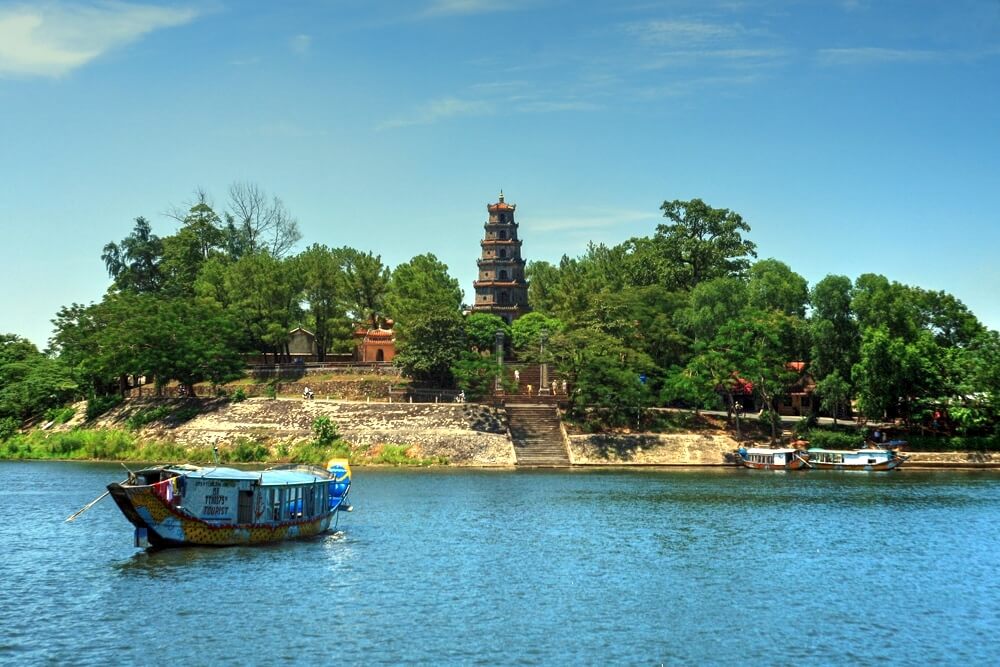
Perched gracefully on Ha Khe Hill overlooking a scenic bend of the legendary Perfume River, this sacred complex has watched over the ancient capital since its founding in 1601. For anyone planning their Hue travel adventure, stepping onto the grounds of this pagoda is an absolute rite of passage, a sensory journey where the sweet scent of pine trees blends seamlessly with the gentle chime of temple bells echoing across the water.
Architecture, Art, and Living History
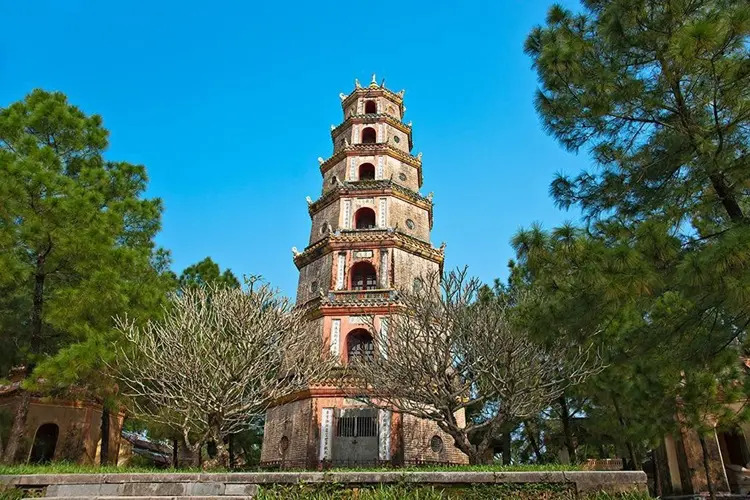
The moment you approach the pagoda from the riverbank, your eyes are immediately drawn to the iconic Phuoc Duyen Tower. Standing proudly at 21 meters tall, this majestic seven-story octagonal pavilion is the unofficial face of Hue. Built in the mid-19th century, each of its seven tiers is dedicated to a different manifestation of the Buddha, creating a striking visual hierarchy against the blue sky.
As you wander deeper into the manicured courtyard, past the giant marble turtle carrying a historic 1715 stone stele, you will encounter a fascinating mix of ancient royal heritage and modern history. Housed within the rear quarters is the famous light-blue Austin car. This historic vehicle carried the late monk Thich Quang Duc from this very temple to Saigon in 1963, where his monumental self-immolation shook the world and changed the course of Vietnamese history. It is this extraordinary intersection of quiet spirituality and powerful historical narratives that makes Thien Mu Pagoda so deeply enchanting to global globetrotters.
Native Travel Tips for the Perfect Visit
To ensure your pilgrimage to this imperial sanctuary is completely seamless, respectful, and visually spectacular, keep these practical insider travel tips in mind:
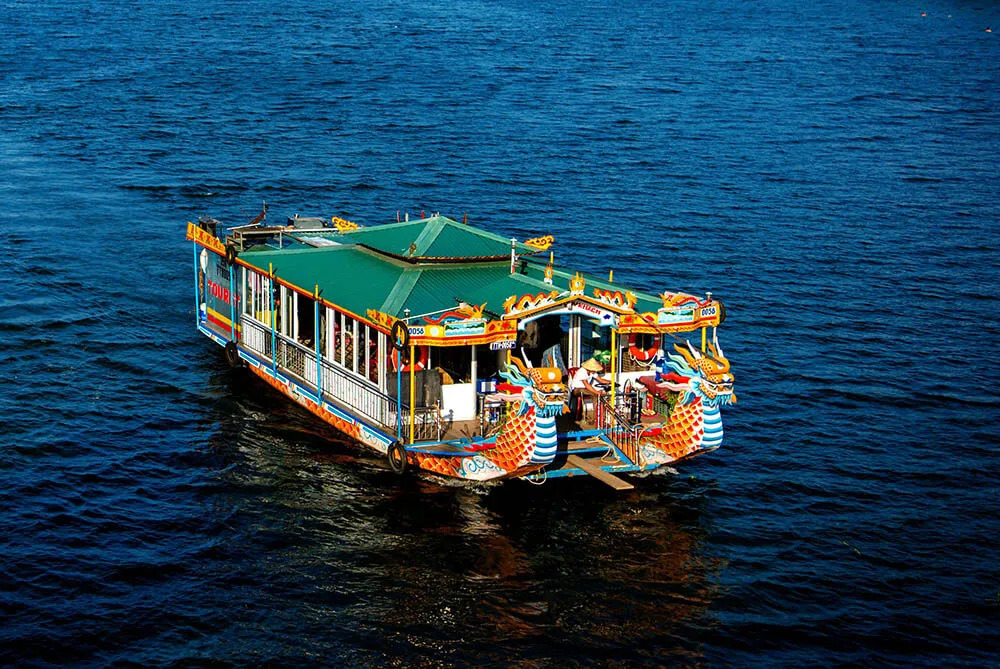
Arrive via a Traditional Dragon Boat: While the temple is easily accessible by car or bicycle, the most cinematic way to approach it is by booking a private dragon boat cruise from the city center. Drifting slowly down the Huong River offers an unmatched perspective of the pagoda rising above the treeline.
Dress Respectfully for Sacred Ground: As Thien Mu is an active place of worship housing practicing novice monks, visitors must dress modestly. Ensure your shoulders and knees are fully covered before entering the main sanctuary halls.
Catch the Golden Hour Magic: Plan your visit for the late afternoon, around 4:30 PM. Not only will you avoid the midday tropical heat, but you will also witness a breathtaking sunset over the river, right as the monks begin their evening chanting session.
Unlock the Imperial Secrets of Hue with Hanoitourist
Navigating regional boat transfers, coordinating entrance schedules for multiple royal tombs, and finding authentic local storytellers can quickly become a complex logistical puzzle for independent travelers.
At Hanoitourist, we bring ten years of premium inbound travel expertise to turn your Central Vietnam travel dreams into a flawless reality. Our signature Hue travel packages are meticulously structured from A to Z to offer you the perfect blend of absolute luxury, comfortable pacing, and raw cultural depth.